




Gen Keane: We are on the cusp
Fox News senior strategic analyst Ret. Gen. Jack Keane discusses President Donald Trump’s approach to the Iran conflict on ‘Kudlow.’



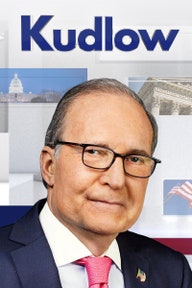







Fox News senior strategic analyst Ret. Gen. Jack Keane discusses President Donald Trump’s approach to the Iran conflict on ‘Kudlow.’


Snapchat parent Snap is laying off about 1,000 employees and closing 300 open roles as activist investor Irenic Capital pushes for cost savings.


A federal jury in New York found Live Nation and Ticketmaster liable for monopolistic practices, in what attorneys general called a landmark victory.


Chili's launches six Big Crispy chicken sandwiches in its $10.99 '3 For Me' bundle, directly targeting McDonald's McCrispy in a battle over value diners.


More than half of outstanding mortgages still carry rates at or below 4%, but new buyers face much steeper costs as average payments hit $2,005 per month.


Barstool Sports founder and President Dave Portnoy weighs in on the new tipping trend that has caused consumers to further squeeze their bank accounts.


Snapchat parent Snap is laying off about 1,000 employees and closing 300 open roles as activist investor Irenic Capital pushes for cost savings.


TKO Group Holdings said Wednesday that WrestleMania 41 "delivered WWE’s largest economic impact number measured to date with $322.2 million."


Outer Realm CEO Dhara Patel relocated from New York to Florida, citing heavy compliance costs and tax savings as key factors in her business move.


A new report reveals the states with the highest average tax refunds, and Florida leads the nation at $4,433 with Texas close behind at $4,344.


Johnny Carson's former Bel Air mansion hits the market for $40 million. The 9,052-square-foot luxury home features six bedrooms, a tennis court and a pool.


Dolly Parton kicked off top-ranked Dollywood's new season and reassured fans about her health. The park unveiled a major new attraction for this year, and continues to expand.


Anker Innovations is recalling more than 1.1 million power banks because consumers could be at risk of burns if the lithium-ion battery inside the product overheats.


Credible promotes Chief Revenue Officer Robert Humann to CEO after nearly 10 years with the Fox Corporation-owned consumer finance technology platform.


In an era of “green" gimmicks and sky-high risk, author John J. Geoghegan says only capitalism can determine if lighter-than-air travel has legs.


University of Texas at Austin bans Shein from campus networks following Gov. Abbott's directive targeting Chinese companies over cybersecurity concerns.


Santa Cruz County in deep blue California was named the least affordable U.S. rental market in 2025, requiring $81.21/hour to rent a modest two-bedroom apartment.


BlackRock survey reveals 30% of Americans have no retirement savings, but more than 70% support proposed Trump Accounts for newborns.


Outer Realm CEO Dhara Patel relocated from New York to Florida, citing heavy compliance costs and tax savings as key factors in her business move.


Changpeng Zhao, founder of crypto exchange Binance, discusses his new book "Freedom of Money," his prison stint and his account of Sam Bankman-Fried's plea for a loan as FTX imploded.


A legal battle over the Greenbrier resort intensifies as the Justice family accuses creditors of deceptive tactics, while an investor alleges fraud and financial mismanagement.


Ford is recalling more than 422,000 vehicles over windshield wiper failures that could impair driver vision and increase crash risk, NHTSA says.


Chili's launches six Big Crispy chicken sandwiches in its $10.99 '3 For Me' bundle, directly targeting McDonald's McCrispy in a battle over value diners.


Cam Newton's Iconic Saga Productions joined Offscript Worldwide, expanding its reach across sports, culture, and lifestyle content creation.


Snapchat parent Snap is laying off about 1,000 employees and closing 300 open roles as activist investor Irenic Capital pushes for cost savings.


Rather than forecast energy prices, I think a better message would remind Americans what the mission is in Iran


Scott Bessent warns gas stations that raised prices amid oil supply fears, saying Treasury will watch to ensure prices drop as conditions improve.


The U.S. Mint is advancing a gold commemorative coin featuring President Trump after the Commission of Fine Arts approved a design, Treasury officials say.


