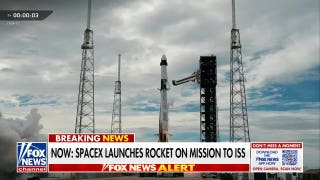

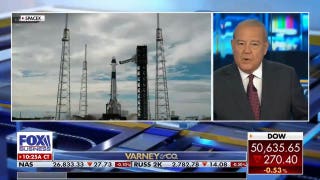
















NASA's SpaceX Crew-13 launches mission to International Space Station
The NASA SpaceX Crew-13 mission will investigate how to 'grow food reliably in space,' NASA says

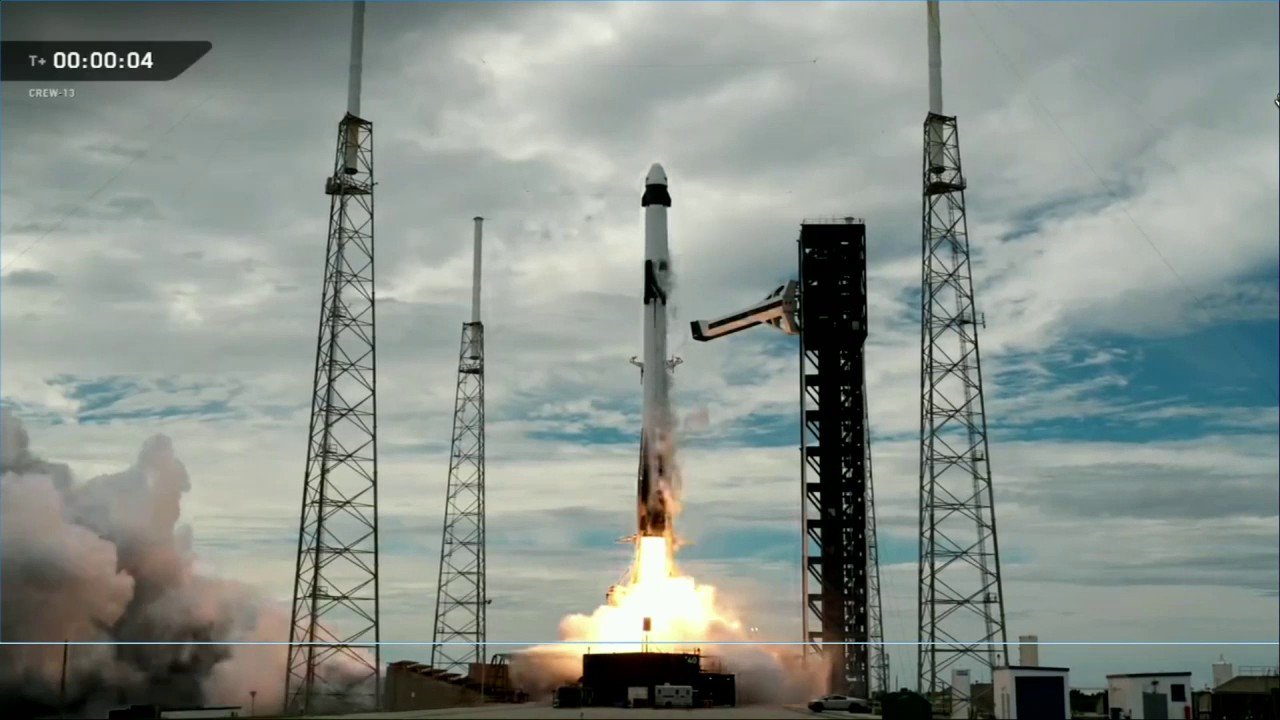
NASA's SpaceX Crew-13 mission launches from Florida
The NASA SpaceX Crew-13 mission lifts off from Cape Canaveral Space Force Station on Thursday, Oct. 1, 2026. (Credit: SpaceX)
The NASA SpaceX Crew-13 mission launched to the International Space Station on Thursday from Cape Canaveral Space Force Station in Florida.
The crew onboard the mission utilizing SpaceX’s Falcon 9 rocket and Dragon spacecraft are NASA astronauts Jessica Watkins, Luke Delaney, CSA (Canadian Space Agency) astronaut Joshua Kutryk and Roscosmos cosmonaut Sergey Teteryantnikov.
"So Jessica, Luke, Josh and Sergey are safely in orbit. They are out of their suits at this time, and because of the short phasing period, the crew are going to have an opportunity to rest up a little bit before rendezvousing with the International Space Station," NASA Administrator Jared Isaacman said following the launch.
"All in-orbit checkouts are complete and Dragon is healthy. It was an incredible launch. I'd like to thank all of those who contribute to it, right from the top with our president, President Trump, all the way through congressional leadership," he added.
SpaceX said that "during their time on the orbiting laboratory, the crew will conduct new research to prepare for human exploration beyond low-Earth orbit and to benefit humanity on Earth."
"The Dragon spacecraft supporting this mission previously flew the Ax-4 mission to and from the space station. This will be the third flight for the first stage supporting this mission, which previously launched Crew-12 and one Starlink mission," according to SpaceX. "Following stage separation, Falcon 9’s first stage will land on Landing Zone 40 (LZ-40) at Cape Canaveral Space Force Station."
SPACEX LAUNCHES STARSHIP INTO ORBIT FOR FIRST TIME EVER BUT CUTS MISSION SHORT
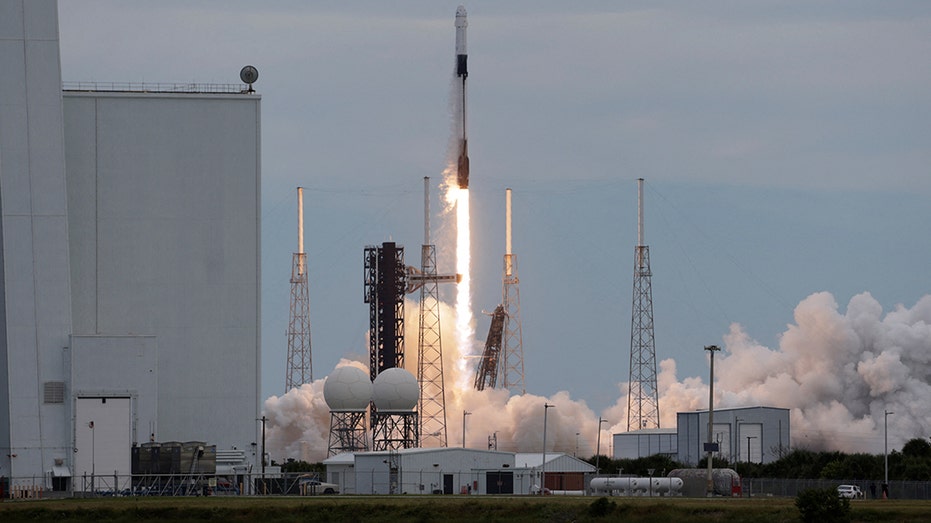
A SpaceX Falcon 9 rocket and Dragon spacecraft lifts off on NASA's Crew-13 mission to the International Space Station, carrying NASA astronauts Jessica Watkins, Luke Delaney, Canadian Space Agency astronaut Joshua Kutryk and Russian cosmonaut Sergey (Philip Scott Andrews/Reuters / Reuters)
NASA said on its website that "during its mission, Crew-13 will investigate practical questions about how to keep crews healthier, grow food reliably in space, and validate the technologies need for deep‑space missions."
"For over 25 years, people have continuously lived and worked aboard the International Space Station, advancing scientific knowledge and demonstrating new technologies that help prepare for human exploration of the Moon and Mars. NASA’s SpaceX Crew-13 crew members are set to join this long legacy, conducting science aboard the orbiting laboratory to advance research for exploration and deliver benefits for all humanity," it continued.
"The crew will use the microgravity environment of the space station to produce human stem cell-derived tissues, which can be used to support personalized medicine, disease modeling, and future pharmaceutical screening for conditions like heart disease and Parkinson’s disease," NASA added.
SPACEX UNVEILS $100 BILLION LOUISIANA LAUNCH SITE EXPECTED TO CREATE THOUSANDS OF JOBS
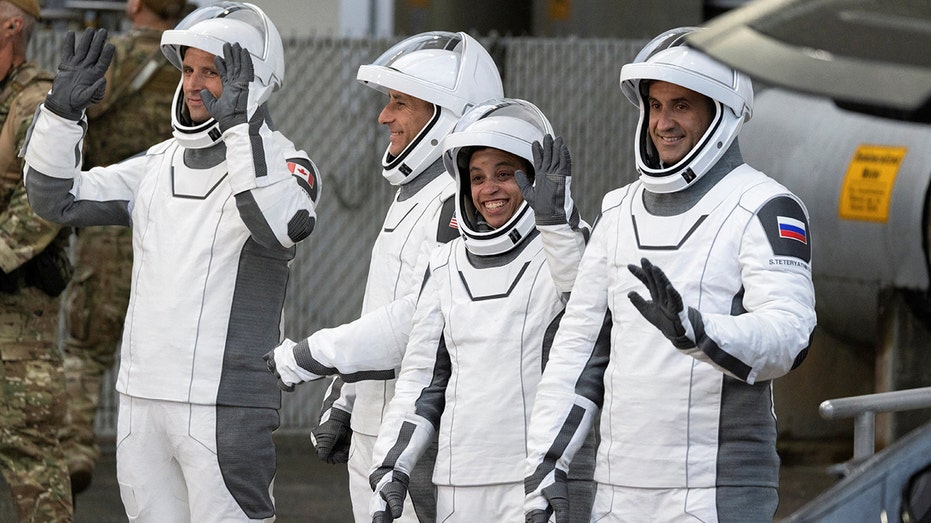
Canadian Space Agency astronaut Joshua Kutryk, NASA astronauts Luke Delaney, Jessica Watkins, and Russian cosmonaut Sergey Teteryatnikov react as they depart for the launch pad at the Kennedy Space Center in Cape Canaveral, Fla., on Thursday, Oct. 1, (Philip Scott Andrews/Reuters / Reuters)
"Crew members also study individual factors linked to blood flow abnormalities in space and testing a new inflight diagnostic device to monitor astronaut health," the agency also said. "They also will explore crop production for future long duration missions by installing a new, mostly autonomous plant growth facility and growing crops in plant pillows at a location of their choice throughout the space station."
SpaceX said, "Falcon 9 is a reusable, two-stage rocket designed and manufactured by SpaceX for the reliable and safe transport of people and payloads into Earth orbit and beyond.
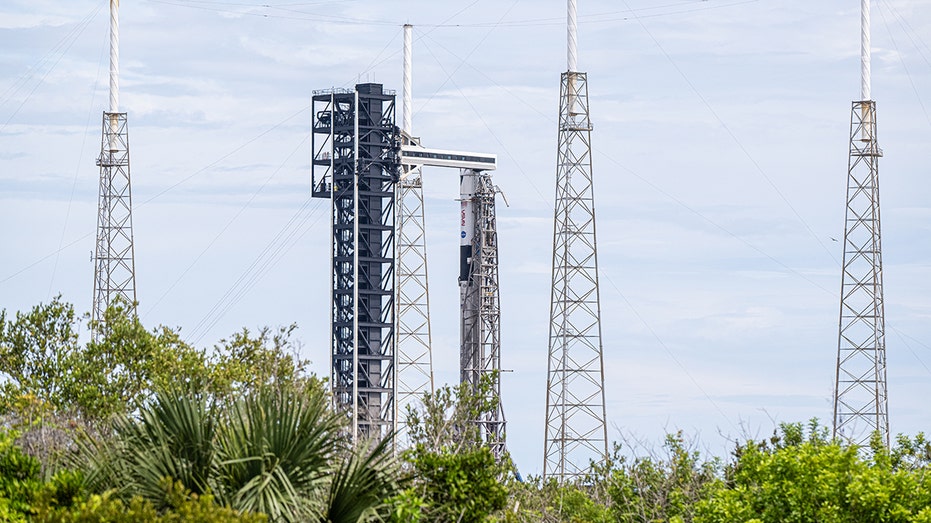
The launch pad at Cape Canaveral Space Force Station in Florida, prior to Crew-13 departing, (Michael Cain Jr./Sipa USA/Reuters / Reuters)
CLICK HERE TO READ MORE ON FOX BUSINESS
"Falcon 9 is the world’s first orbital class reusable rocket. Reusability allows SpaceX to refly the most expensive parts of the rocket, which in turn drives down the cost of space access," SpaceX added.